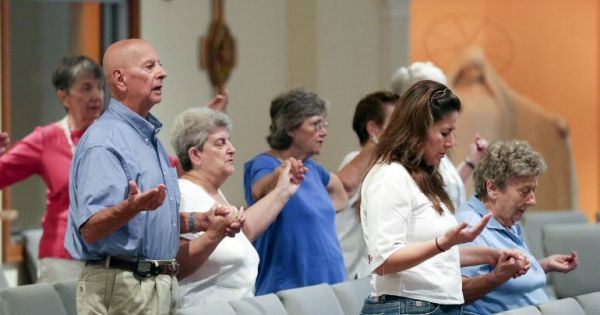
If you’ve been to Mass in the United States, you’ve probably seen it—people raising their hands during the Our Father. Some do it quietly, others hold hands across the pews, and some stand still and wonder what they’re supposed to do.
So what’s actually correct? Is this something Catholics are supposed to do… or just something that developed over time?
What Does the Church Actually Teach?
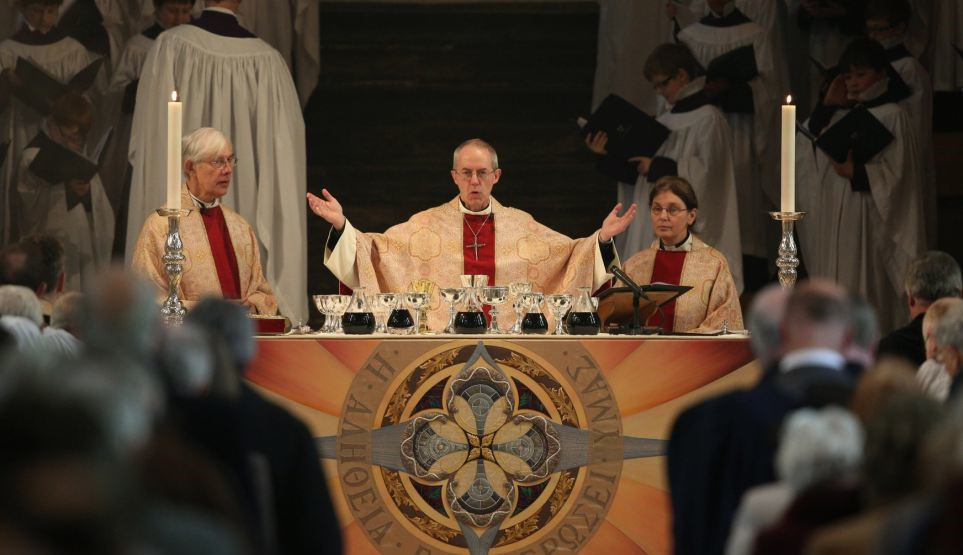
The Catholic Church does not instruct the faithful to raise their hands during the Our Father. In fact, the posture known as the “orans” position—hands extended upward—is reserved for the priest during the Mass.
The General Instruction of the Roman Missal (GIRM), which governs how Mass is celebrated, does not include any directive for the laity to raise their hands during this prayer. That means it is not part of the official liturgy for the congregation.
So while you may see it often, it is not something the Church requires or formally teaches.
Why Do People Do It Anyway?
The practice of raising hands during the Our Father is not something found in the official rubrics of the Mass, but it became common in many places—especially in the United States—over time.
Some believe it expresses unity or a deeper personal prayer. Others picked it up simply by seeing those around them do it. In many parishes, it has become so normal that people assume it is required.
But in reality, it’s more of a custom than a rule.
So What Should You Do?
If you’ve ever felt unsure during the Our Father, you’re not alone. The simplest and safest approach is to follow what the Church actually prescribes—which, in this case, is simply to pray the Our Father reverently without adding gestures that are not part of the liturgy.
At the same time, this is not something that should cause division or judgment. If others raise their hands, it doesn’t mean they are doing something wrong intentionally—it’s often just what they’ve seen and learned.
The key is to stay focused on the prayer itself, not the posture of others.
In the end, the Our Father is about unity in prayer—not uniformity in gestures.

Leave a Reply